

Inspiration
Gems and Hidden Gems: Six Places to Discover With a Guide in 2027
Some places are famous for a reason. Others are worth discovering precisely because so few people know them. This year we have picked six of each kind: three gems you have almost certainly heard of, and three hidden gems that rarely make the guidebooks.
The Alhambra, Bran Castle and Sintra draw millions of visitors, yet most of them leave knowing only the headline story. St Mary's Monastery in Albania, the artists' village of Bussana Vecchia and the island of Spinalonga are quieter, and each has a past that surprises almost everyone who hears it.
Whichever you choose, the difference is the same. Our local guides know the stories, the shortcuts and the details that no guidebook can give you, so a famous landmark feels new and a hidden corner feels like a discovery.
The gems
The Alhambra, Granada
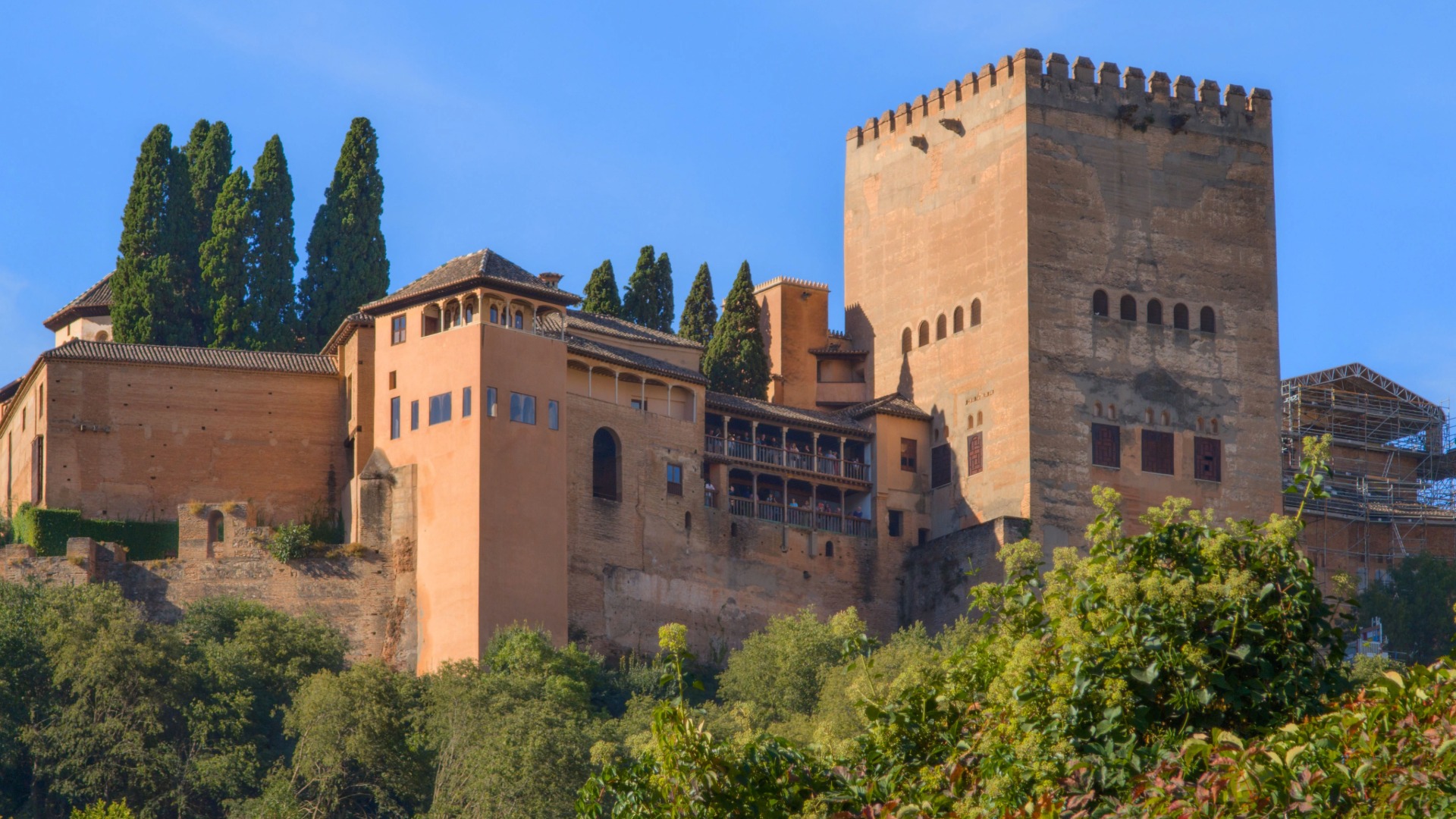
Set on a hilltop above Granada with the Sierra Nevada behind it, the Alhambra is one of the most visited monuments in Spain. Its name comes from the Arabic for "the red castle", after the reddish walls that glow at sunset. Most of what you see today was built by the Nasrid dynasty in the 13th and 14th centuries, the last Muslim rulers of Spain.
The heart of the complex is the Nasrid Palaces, a series of courtyards and halls covered in carved plaster, painted tiles and honeycombed ceilings. The Court of the Lions, with its fountain held up by twelve stone lions, is the image most people carry home. Look closely at the walls, though, and you will see they are covered in Arabic inscriptions, many of them poetry written for the building itself.
The Alhambra was almost lost. By the early 19th century parts of it had fallen into ruin and were home to squatters and soldiers. In 1829 the American writer Washington Irving lived in its rooms for a few months, and his Tales of the Alhambra introduced the palace to readers across Europe and America and helped spark the interest that saved it.
Beyond the palaces lie the Generalife gardens, the summer retreat of the sultans, with their long water channels, clipped hedges and views back across the Albaicín. Many visitors rush through them on the way out, which is a shame, because they are the most peaceful part of the site and best enjoyed slowly.
This is where a guide earns their place. Entry to the Nasrid Palaces is by timed ticket, the crowds can be heavy, and without context the rooms blur into one another. A good guide will tell you what each hall was used for, how a royal channel carried water from the River Darro to feed every fountain and pool, and where to stand for the view most people miss.
Our recommended tour - Andalucia's Eastern Coast & Granada
Bran Castle, Transylvania
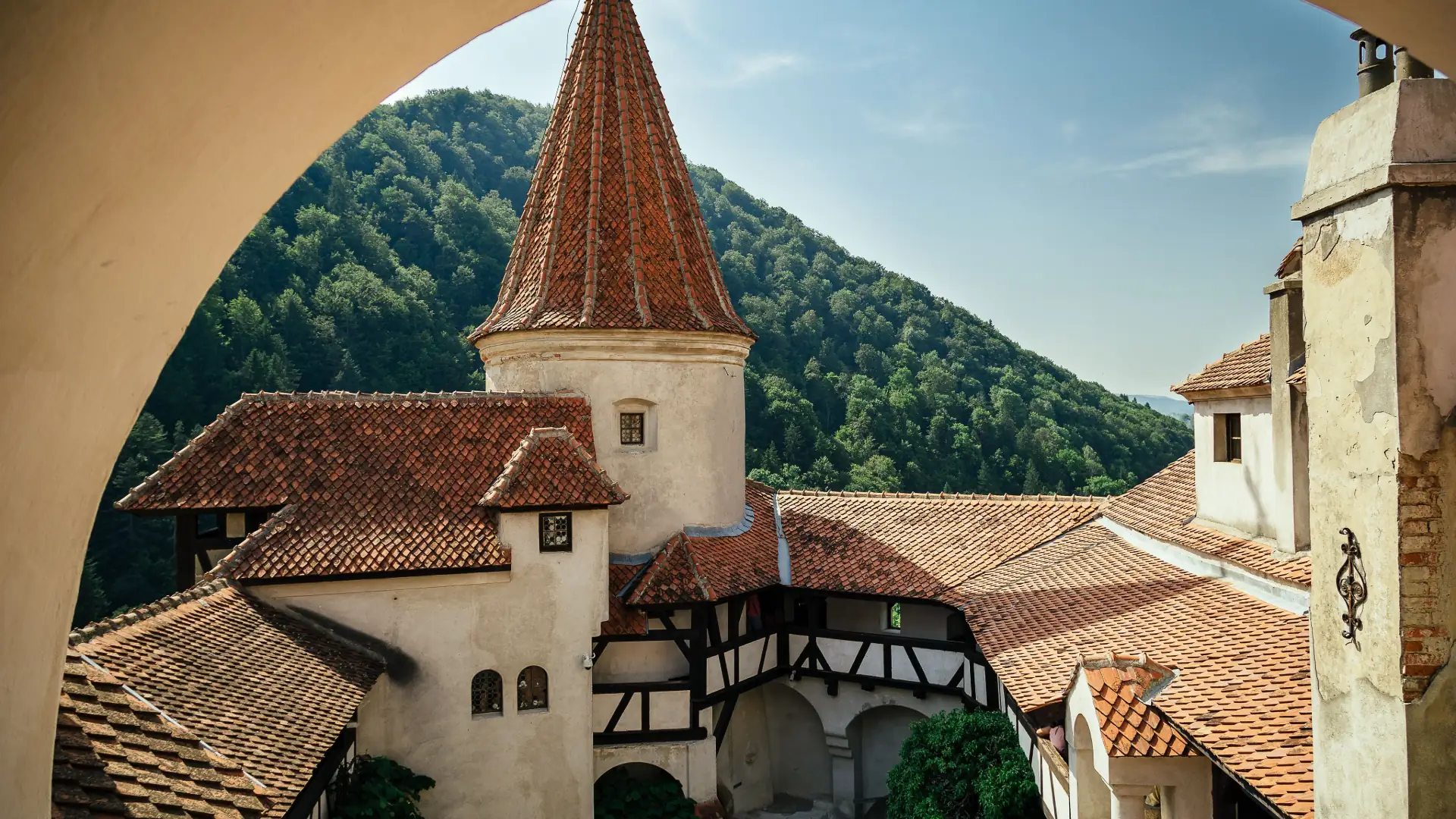
Perched on a rocky outcrop at the entrance to a mountain pass, Bran Castle looks exactly as a Transylvanian castle should. Its turrets, steep roofs and white walls have made it world famous as "Dracula's Castle", and it is one of the most visited sights in Romania.
The real history is rather different. The castle was built in the late 14th century by the Saxon townspeople of nearby Brașov, as a fortress and customs post guarding the trade route between Transylvania and Wallachia. Merchants passing through paid their dues here, and the castle's position made it one of the most strategic points in the region.
The Dracula connection owes more to imagination than to fact. Bram Stoker never visited Romania, and there is little evidence that Vlad the Impaler, the prince often linked to the legend, ever spent much time at Bran. The castle simply fits the description in the novel so well that the name stuck.
The story most visitors miss is that of Queen Marie of Romania. In 1920 the people of Brașov gave the castle to her, and she turned it into a much-loved family home, furnishing its rooms and laying out the gardens. Much of what you see inside today reflects her taste rather than any medieval warlord.
After the Second World War the castle was taken by the communist state, and it was only returned to Queen Marie's descendants in the 2000s. Walking its narrow staircases with a guide, you hear how a border fortress became a royal retreat, then a state museum, and finally one of Europe's best-known tourist attractions.
Our recommended tour - Bucharest & Transylvania
Sintra and its natural park, Portugal
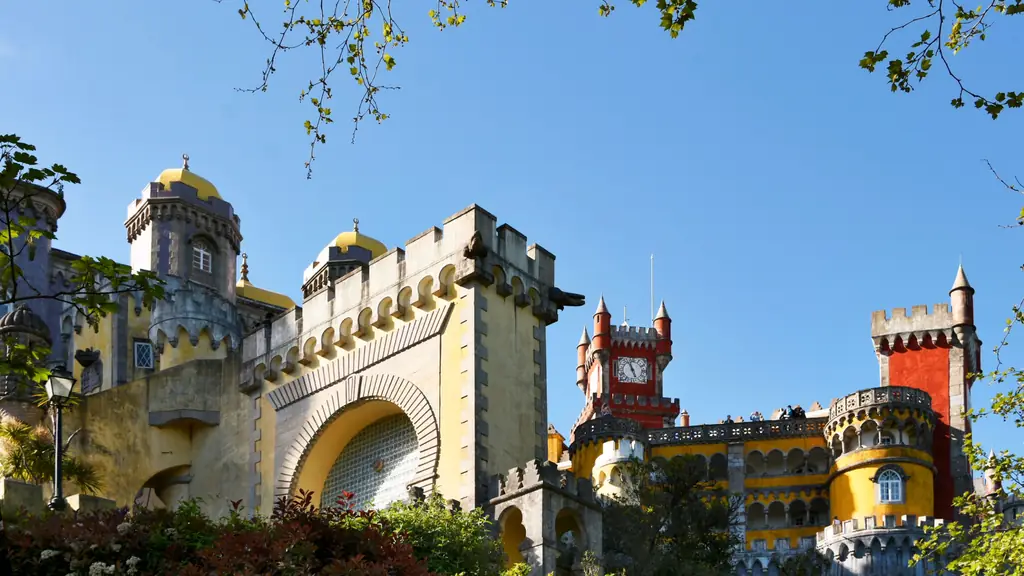
Just outside Lisbon, the hills of Sintra rise out of the coastal plain wrapped in forest and, often, a soft sea mist. For centuries Portuguese kings and aristocrats came here to escape the summer heat, and they left behind a landscape of palaces, gardens and follies unlike anywhere else in Europe. Lord Byron was so taken with it that he called it a "glorious Eden".
The best-known sight is the Pena Palace, painted in bright yellow and red and sitting on one of the highest peaks in the park. It was created in the 19th century for King Ferdinand II, who turned a ruined monastery into a romantic fantasy of towers, domes and decorated terraces. On a clear day the views reach all the way to the Atlantic.
Below it, the Moorish Castle snakes along the ridge, its walls dating back more than a thousand years. Elsewhere in the hills you will find Quinta da Regaleira, with its spiral Initiation Well descending deep into the ground, and the Monserrate Palace, surrounded by gardens planted with species from around the world.
What many visitors overlook is the natural park itself. The Sintra-Cascais Natural Park stretches from the forested hills down to the wild Atlantic coast at Cabo da Roca, the most westerly point of mainland Europe. Its microclimate supports ancient woodland, ferns and moss-covered boulders, and the walking trails between the palaces are often quieter and more memorable than the palaces themselves.
Sintra's beauty is also its challenge. The roads are narrow, the queues for Pena can be long, and it is easy to spend the day in traffic rather than on foot. A guide who knows the paths can lead you between the sights through the forest, timing each visit to avoid the busiest moments.
Our recommended tour - Walking in Portugal & the Sintra Natural Park
The hidden gems
St Mary's Monastery, Zvernec, Albania
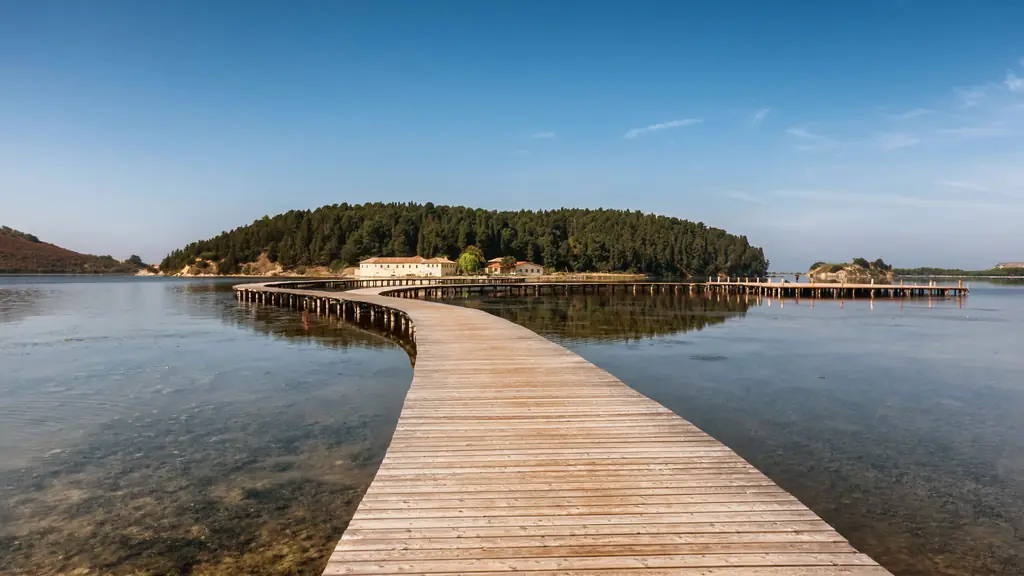
On the edge of the Narta Lagoon, a short drive from the coastal city of Vlora, a long wooden footbridge leads across the water to a tiny wooded island. At its centre stands the Monastery of St Mary, a small stone church surrounded by cypress and juniper trees. Few places in Europe feel quite so peaceful.
The church is Byzantine in origin and is thought to date from around the 13th or 14th century. For generations it has been a place of pilgrimage, and it still draws local worshippers for the feast of the Assumption each August. Inside and out, it carries the marks of centuries of weather, war and devotion.
Its survival is remarkable. Under Albania's communist regime, religion was banned outright and many churches and mosques were destroyed or turned to other uses. The monastery's isolation on its little island helped it endure, and today it stands as a quiet reminder of the faith that was practised here long before and long after those years.
The setting is as much a draw as the building. The Narta Lagoon is one of Albania's most important wetlands, home to flamingos, herons and many other birds, and the shoreline beyond is lined with empty sandy beaches. Along the way you will also pass concrete bunkers from the communist era, built in their hundreds of thousands across the country.
On our Walking in the Beautiful Balkans holiday, the visit to the monastery opens a gentle coastal walk along the Adriatic, past the beaches of Dalan and Porto Novo with the former military island of Sazan visible offshore. Your guide brings the place to life, explaining how one small island holds Byzantine faith, Cold War history and some of the best birdwatching on the coast.
Our recommended tour - Walking in the Beautiful Balkans
Bussana Vecchia, Italian Riviera
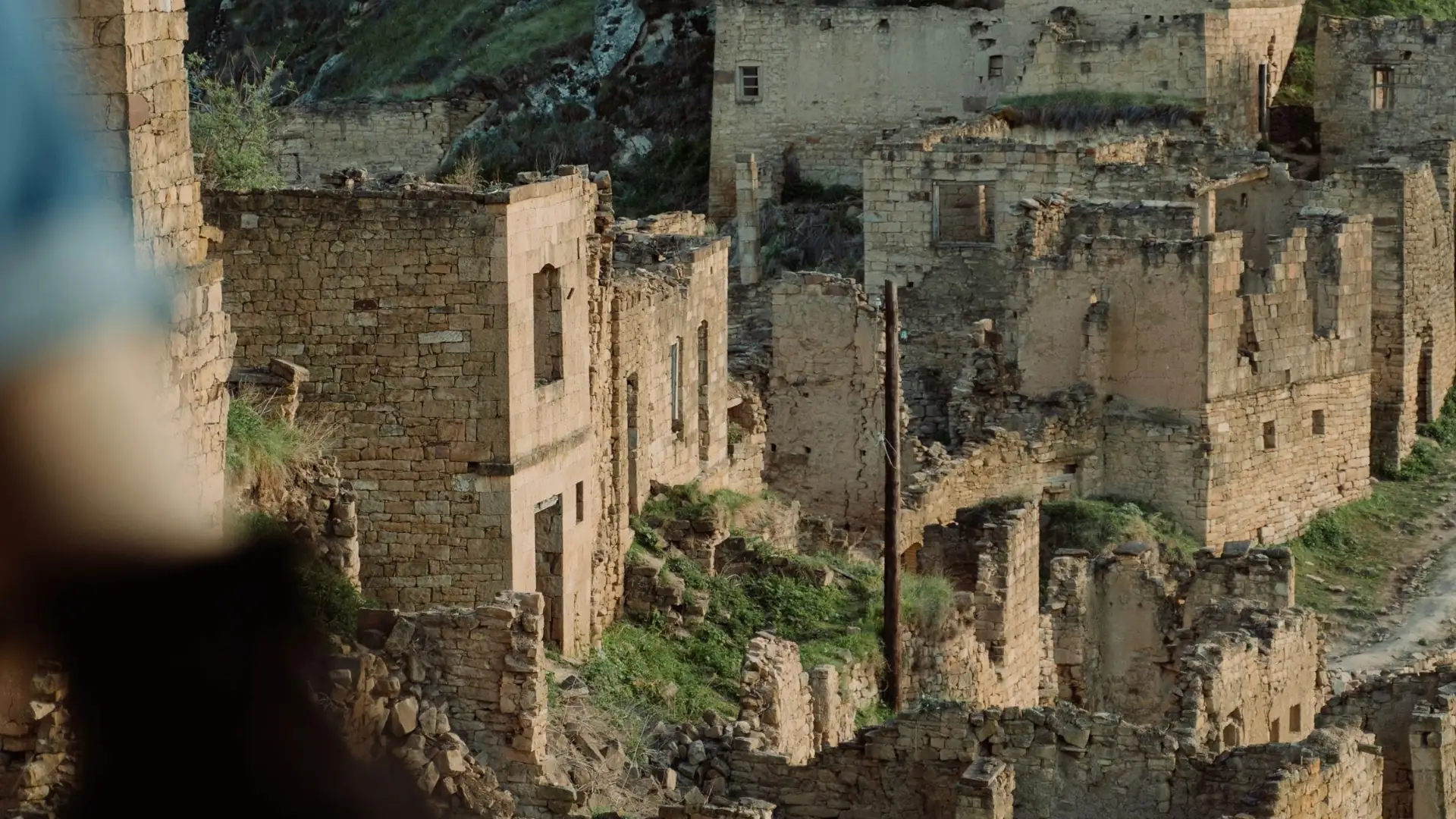
High on a hillside just east of Sanremo, the old village of Bussana Vecchia clings to the slope above the Ligurian coast. From a distance it looks like any medieval hill village. Walk up its stone lanes, though, and you find something quite different: a place that was abandoned, left to fall into ruin, and then brought back to life by artists.
In February 1887 a powerful earthquake struck the Riviera. In Bussana the church vault collapsed and many villagers lost their lives. The village was declared unsafe, and the survivors built a new settlement further down the hill, Bussana Nuova. The old village was left empty, and for decades it was a ghost town of roofless houses and silent streets.
In the years after the Second World War, people began quietly moving back into the ruins, living without running water or electricity. Many were evicted, but from the 1950s and 1960s a community of painters, sculptors and craftspeople from across Europe settled here and refused to leave. They rebuilt the houses with their own hands and created the international artists' village that exists today.
Wandering the lanes now, you pass open studios, small galleries, ceramics workshops and cafés tucked into rebuilt stone houses. At the centre stands the ruined Church of Sant'Egidio, still roofless and open to the sky, a striking reminder of the morning the earthquake struck.
On our Walking in the Italian Riviera and Monte Carlo holiday, you reach Bussana Vecchia on foot from the historic town of Taggia, which is exactly how this village is best approached, since cars cannot drive into it. Your guide tells the story of the earthquake and the artists who reclaimed the village, so the ruins and studios make sense as you explore.
Our recommended tour - Walking in the Italian Riviera & Monte Carlo
Spinalonga, Crete
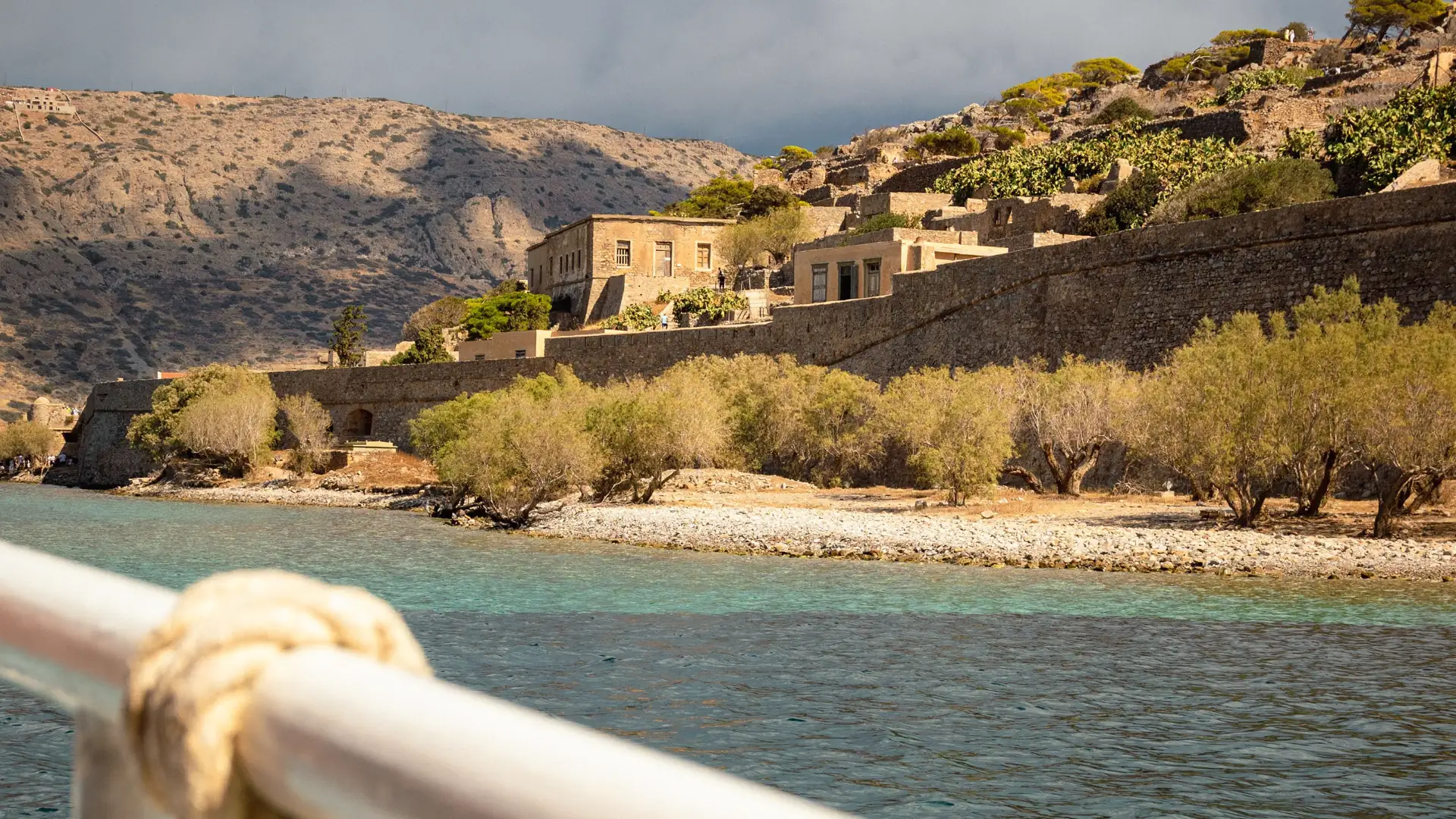
A short boat ride from the fishing village of Plaka, near Elounda on Crete's north-east coast, the small rocky island of Spinalonga sits in a sheltered bay of turquoise water. It is well known in Greece, and readers of Victoria Hislop's novel The Island will recognise the name. Yet its full story remains a hidden gem for most travellers, and it is one with a dark past.
The island's walls were built by the Venetians in the late 16th century, when they ruled Crete, to guard the approach to the bay. The fortress was so well defended that it held out long after the rest of the island had fallen to the Ottomans, and Spinalonga later became home to a small Muslim community.
In the early 20th century the island took on a very different role. From 1903 it became a leper colony, where people diagnosed with leprosy, now known as Hansen's disease, were sent to live in isolation from the rest of society. Many were taken from their families and never returned home.
Life on the island was hard, but its residents built a community of their own. They married, ran shops and a café, held services in the church and campaigned for better conditions and medical care. The colony finally closed in 1957 once effective treatment had become available, and the island fell silent.
Walking through Spinalonga today, along its single main street of restored houses, past the church and the colony's buildings, is a moving experience. With a guide, the empty doorways and quiet lanes are filled with the stories of the people who lived there, and the island becomes far more than a pretty view across the water.
Our recommended tour - Walking in Crete
Gem or hidden gem, the guide makes the difference
Famous or little-known, every one of these places has more to it than first meets the eye. The Alhambra has its poetry on the walls, Bran its royal past, Sintra its forest trails. Zvernec, Bussana Vecchia and Spinalonga each hold a story that stays with you long after you leave.
Our local guides know those stories because these are their places. With flights from your local airport, transfers and luggage handled, you are free to enjoy the walk, the view and the conversation.
Explore our 2027 holidays or call our team on 01858 896 111.
What our walkers say


The guides on this walking holiday were exceptionally good - dealing with a few emergencies in a very professional way. I was most impressed.
The location of the hotel isn’t ideal, as it is on a very steep hill, but a real bonus are the two free shuttle buses which run every ten minutes. One goes to the supermarkets and the other goes to the beach.
I am so pleased that I booked an extra week here as I have found lots to do using the local buses to get around. These are incredibly cheap and I’ve enjoyed using them.
I would not hesitate to recommend this holiday to anyone who loves walking. It is a fascinating island, worth exploring.